Pelvic Floor Therapy in Newmarket: A Non-Invasive Solution for Bladder Control & Core Strength
N.H.F Clinics • August 11, 2026
Let’s talk about something people rarely bring up — even though it affects an enormous number of them. Leaking a little when you sneeze, cough, laugh, or jump. Feeling like you need a bathroom urgently and often. A core that feels weak no matter how many planks you do. These are extremely common experiences, particularly after pregnancy and as we get older, and far too many people simply accept them as permanent.
They usually aren’t. Pelvic floor therapy in Newmarket offers a comfortable, completely non-invasive way to rebuild strength where it matters — and you don’t even have to get undressed.
What Is the Pelvic Floor, and Why Does It Matter?
Your pelvic floor is a hammock of muscles at the base of your pelvis. It supports your bladder, bowel, and (in women) the uterus, and it plays a central role in bladder control, core stability, and sexual function.
The
Cleveland Clinic explains that these muscles support the pelvic organs and are essential to controlling the bladder and bowel — which is exactly why weakness there shows up in such disruptive, everyday ways. Pregnancy and childbirth, aging, menopause, high-impact exercise, chronic coughing, and extra weight around the midsection can all contribute to that weakening.
Signs Your Pelvic Floor May Need Attention
You might benefit from pelvic floor therapy if you notice leaking when you cough, sneeze, laugh, run, or lift; a sudden, urgent need to urinate; frequent trips to the bathroom, including at night; a feeling of heaviness or pressure in the pelvis; or a core that feels weak and unsupported despite regular exercise. None of these are things you simply have to live with.
How HIFEM Pelvic Floor Therapy Works
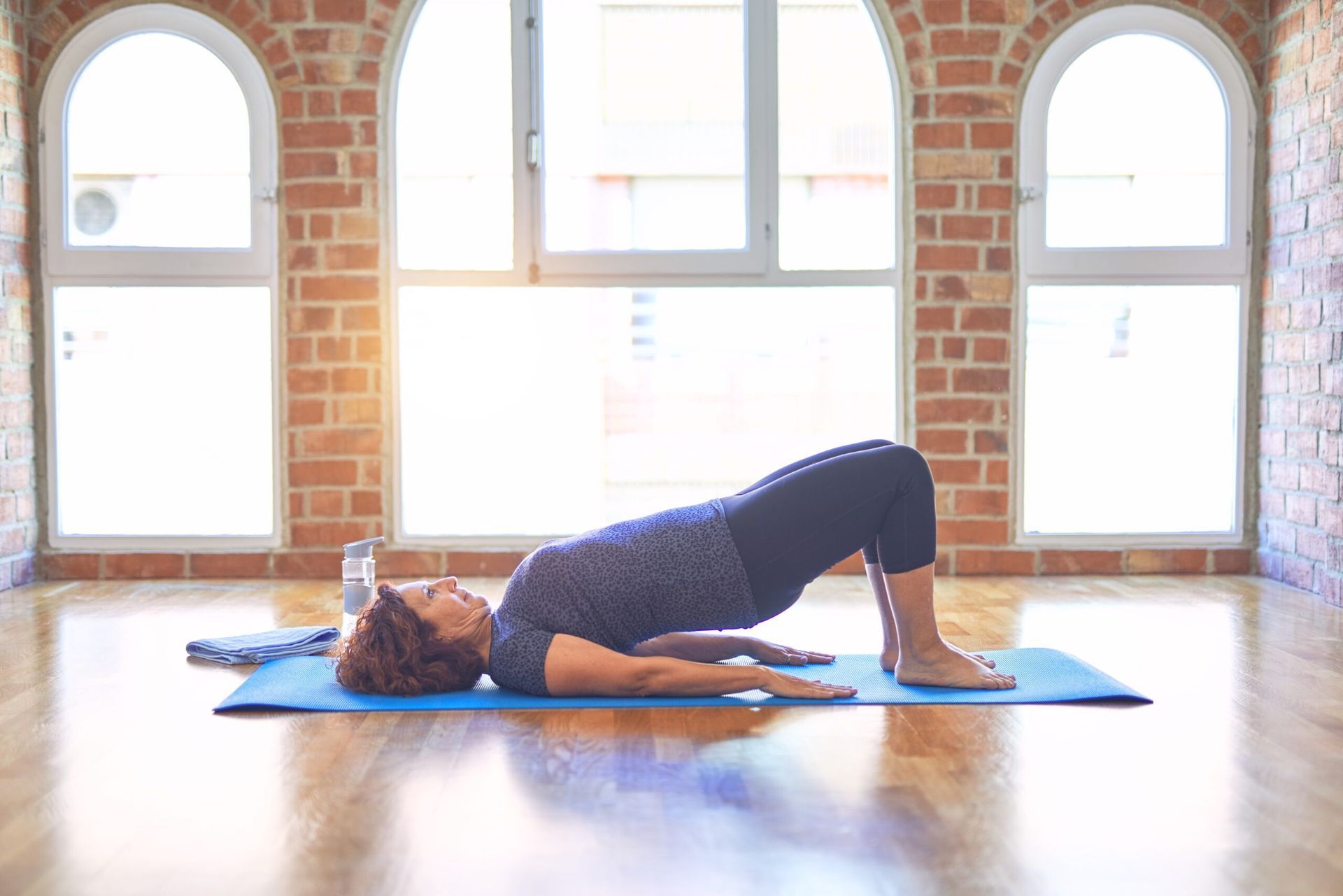
Traditional Kegel exercises can help — but only if you can find the right muscles and contract them correctly and consistently, which many people struggle with. Our pelvic floor rehab takes the guesswork out entirely.
It uses HIFEM (high-intensity focused electromagnetic) technology to trigger supramaximal contractions of the pelvic floor muscles — far more intense and far more numerous than you could achieve voluntarily. A single session delivers thousands of these contractions, effectively giving your pelvic floor an intensive workout it could never do on its own.
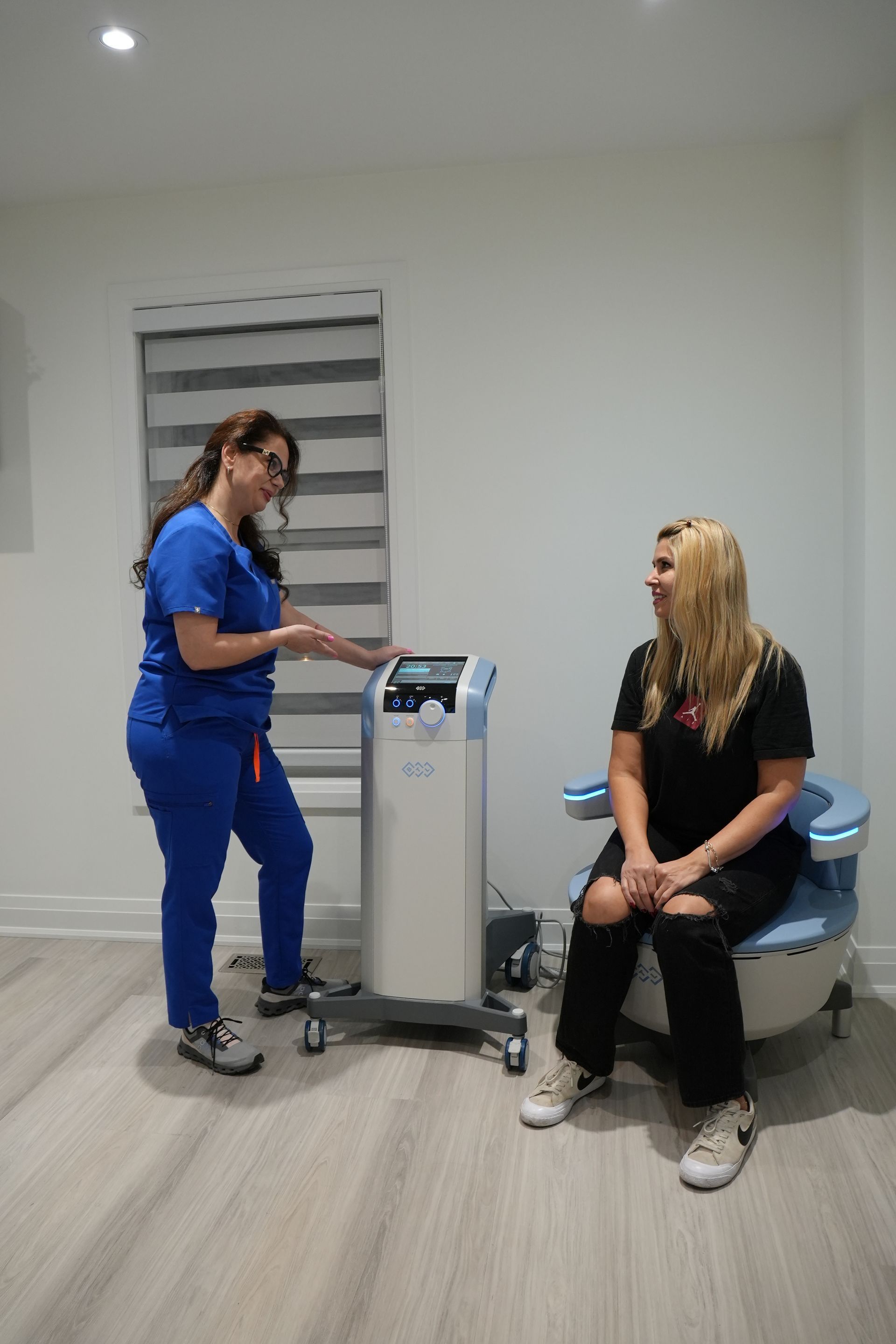
And the practical part people love: you sit fully clothed in a specialized treatment chair. There’s no undressing, no surgery, no needles, and no downtime. Most people describe the sensation as unusual but not uncomfortable — a tingling, pulsing contraction — and simply carry on with their day afterward.
What to Expect from Treatment
Sessions are short — typically around half an hour — and are usually recommended as a course of several treatments spread over a few weeks, since muscle strength builds progressively, just as it would with any training programme. Many clients begin noticing changes partway through their series, with continued improvement afterward. As with any treatment, individual results vary, and your provider will set realistic expectations at your assessment.
Because pelvic floor therapy is completely non-invasive, it fits easily into ordinary life — a lunch break, a gap between errands. That accessibility is a big part of why people actually complete their course and see results.
It’s Not Just About Leaks — It’s About Confidence
The functional benefits are real: better bladder control, a stronger core, better postural support. But the change clients talk about most is the confidence. Not planning your day around bathrooms. Going back to the workout class you gave up. Laughing without bracing. Feeling like your body is yours again.
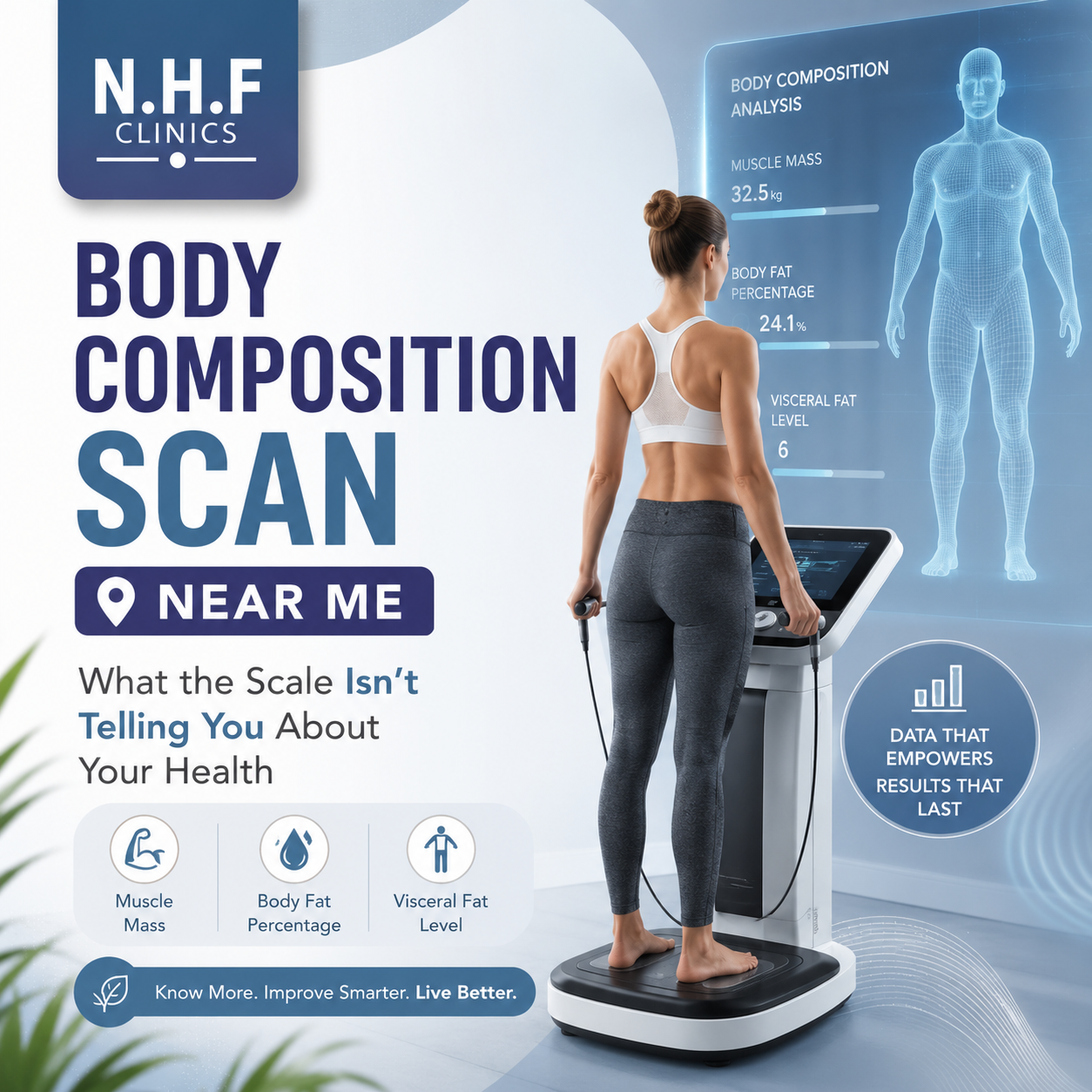
It also fits naturally within a broader approach to strength and healthy aging. Many of our clients pair pelvic floor work with a body composition scan to understand their muscle mass, or with grip strength and balance assessments — because staying strong and independent is about the whole body, not one muscle group.
Who Is It For?
Pelvic floor therapy is often associated with postpartum women, and it’s certainly valuable there — but it isn’t only for them. Men experience pelvic floor weakness too, particularly with age or after prostate surgery. Athletes, people going through menopause, and anyone noticing early signs of weakness can benefit.
As with any medical treatment, it isn’t appropriate for everyone. Certain conditions, implanted devices, and pregnancy may mean we recommend a different approach, and we’ll always discuss this openly during your consultation. Treatment at N.H.F Clinics is delivered under qualified medical supervision, and we’d encourage you to keep your family physician informed as part of your overall care.
What Happens at Your First Visit
We know this can feel like an awkward thing to raise, so we try to make the first step as easy as possible. Your visit begins with a private, unhurried conversation — what you’re experiencing, how long it’s been going on, how it’s affecting your daily life, and what you’d like to change. There’s no examination gown and no exposure involved in HIFEM treatment itself.
From there we’ll review your medical history to confirm the treatment is appropriate for you, explain exactly what the sessions involve, and set out a realistic plan and timeline. You’ll leave knowing what to expect — and under no obligation to proceed. Many clients tell us afterwards that the hardest part was simply booking the appointment, and that the conversation itself was a relief.
Frequently Asked Questions
1. Does pelvic floor therapy hurt?
No. Most people describe the contractions as an unusual tingling or pulsing sensation rather than pain. You remain fully clothed and seated throughout.
2. How many sessions will I need?
A course of several sessions over a few weeks is typical, since muscle strength builds progressively. We’ll recommend a personalized plan at your assessment.
3. Is there any downtime?
None. You can drive yourself home and return to your normal activities immediately.
4. Do I still need to do Kegels?
Your provider may still recommend at-home exercises to support and maintain your results — but HIFEM does the heavy lifting, which is especially helpful if you’ve struggled to isolate the right muscles on your own.
5. Is this only for women?
Not at all. Men can experience pelvic floor weakness as well, and can benefit from treatment.
Book Your Pelvic Floor Consultation in Newmarket
You don’t have to plan your life around this. N.H.F Clinics welcomes clients from Newmarket, Aurora, East Gwillimbury, Holland Landing, Bradford, Keswick, and the surrounding York Region communities.
Book a confidential consultation and let’s talk about getting your strength — and your confidence — back.
Share This Blog