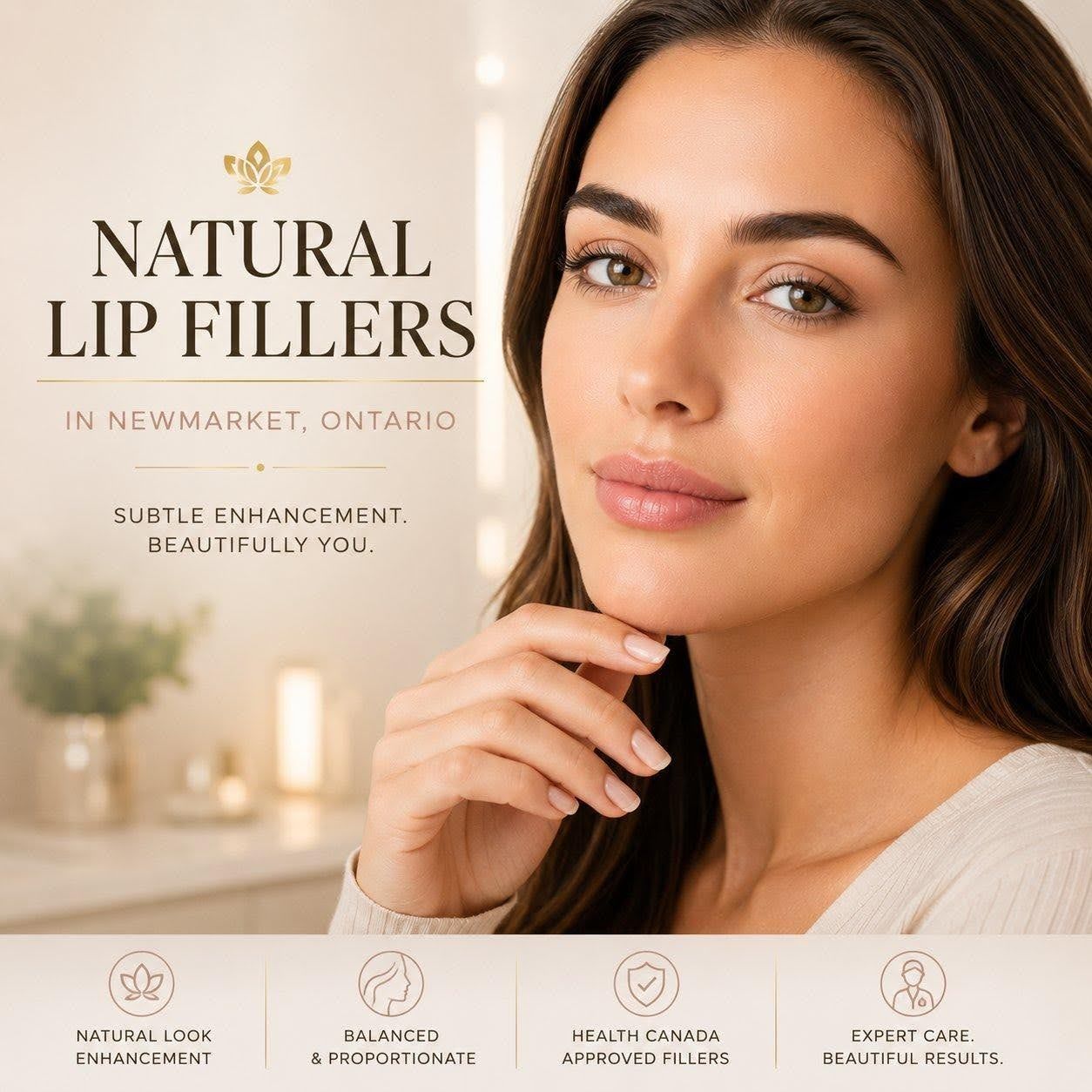
Botox vs. Dermal Fillers in Newmarket: Which Anti-Wrinkle Treatment Is Right for You?
N.H.F Clinics • July 28, 2026
It’s one of the most common questions we hear at our clinic: “Should I get Botox or fillers?” They’re often mentioned in the same breath, and many people assume they’re roughly interchangeable. They aren’t. Botox and dermal fillers are two very different treatments that solve two very different problems — and understanding that difference is the key to choosing wisely and getting a result that looks natural.
This guide breaks down how each one works, what it treats best, how long it lasts, and how to decide which is right for you. If you’ve been researching anti-wrinkle treatments in Newmarket, this is the clearest place to start.
The Simplest Way to Think About It: Relax vs. Restore
Here’s the one-sentence version. Botox relaxes muscles. Fillers restore volume. Almost everything else follows from that.
Botox (a botulinum toxin) works on the muscles beneath your skin. When those muscles repeatedly contract — every time you frown, squint, or raise your eyebrows — they crease the skin above them. Over years, those creases become visible lines. Botox gently relaxes the targeted muscle so the overlying skin smooths out.
Dermal fillers do something entirely different. They’re gels (usually hyaluronic acid, a substance your body already produces) that are injected to add volume back where it’s been lost. As we age, we lose fat, collagen, and bone density in the face — cheeks flatten, folds deepen, lips thin. Fillers physically fill and support those areas.
What Botox Treats Best: Dynamic Wrinkles
“Dynamic” wrinkles are the ones caused by movement — they appear or deepen when you make an expression. Our Botox treatments are most commonly used for frown lines between the brows, horizontal forehead lines, and crow’s feet at the corners of the eyes.
According to the
American Academy of Dermatology, most people see results within about three to seven days, and improvements typically last around three to four months — sometimes longer. Treatment itself takes only a single office visit, and most patients return to their normal activities right away.
What Fillers Treat Best: Volume Loss and Static Lines
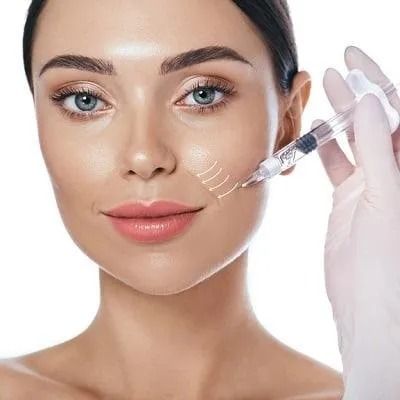
“Static” wrinkles are visible even when your face is completely at rest — and no amount of muscle relaxing will erase them, because they aren’t caused by movement. That’s where dermal fillers come in. They’re ideal for hollow or flattened cheeks, deeper folds around the nose and mouth, loss of definition along the jaw or chin, and thinning lips.
Speaking of lips — lip fillers are simply a dermal filler used with a specific goal: adding gentle volume, definition, and symmetry to the lips. Filler results typically last longer than Botox, often somewhere in the range of six to eighteen months, depending on the product and the area treated.
Side-By-Side: The Practical Differences
- How they work - Botox relaxes the muscle causing the crease. Fillers add volume beneath the skin to lift and smooth.
- Best for - Botox: forehead lines, frown lines, crow’s feet. Fillers: cheeks, nasolabial folds, lips, chin and jaw definition.
- When you see results - Botox takes a few days to a couple of weeks to fully settle. Fillers are visible immediately, with the final result apparent once swelling resolves.
- How long it lasts - Botox generally about three to four months. Fillers generally six to eighteen months.
- Downtime -
Both are minimal. You may have slight redness, small bumps, or a little bruising that settles quickly.
Why Many People Benefit from Both
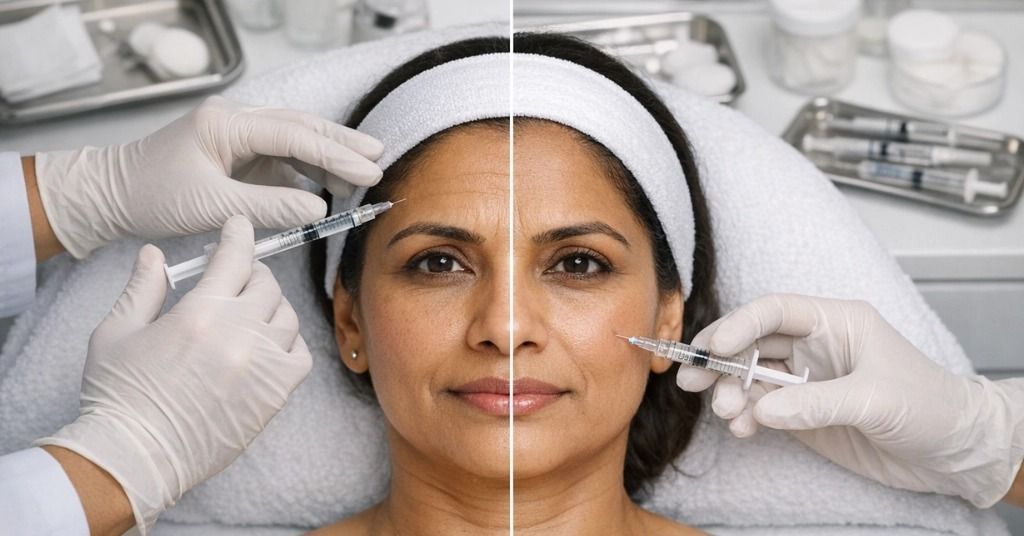
Here’s the part most articles skip: this often isn’t an either/or decision. Because the two treatments solve different problems, they work beautifully together. Botox can soften the lines across your forehead while filler restores volume to cheeks that have flattened — and the combined result usually looks more balanced and natural than either treatment pushed to its limit on its own.
That’s exactly why a skilled injector will often recommend a modest amount of each rather than a large amount of one. Overfilling in an attempt to fix a problem that filler was never designed to solve is one of the most common reasons results start to look “done.”
How to Actually Decide
Try this at home: look in the mirror with a relaxed face. Then make an expression — frown, or smile widely. If a line only appears (or gets much deeper) when you move, it’s likely dynamic, and Botox is the usual answer. If the line or hollow is clearly there even at rest, filler is more likely the right tool.
That said, faces are complicated, and many concerns are a mix of both. The reliable way to know is a professional skin and facial assessment, where we look at your face as a whole, discuss your goals, and build a plan around what will actually work.
Why the Injector Matters More Than the Product
Both Botox and fillers are medical treatments, and the AAD is emphatic on this point: injecting these products safely requires in-depth medical knowledge of facial anatomy. The same product in different hands can produce very different outcomes.
At N.H.F Clinics, all injectable treatments are delivered under qualified medical supervision led by Dr. Mohajerani — the standard you should expect from a medical spa in Newmarket rather than a salon setting. It’s the reason clients from across York Region trust us with their faces.
Frequently Asked Questions
1. Can I get Botox and fillers on the same day?
In many cases, yes — combining them in one visit is common and can produce a beautifully balanced result. Your provider will confirm what’s appropriate for you during your consultation.
2. Which one is cheaper?
It depends entirely on how much product is needed and the areas being treated, so a per-treatment comparison isn’t meaningful. We’ll give you clear, personalized pricing at your consultation, with no pressure to proceed.
3. Which is safer?
Both have strong safety records when performed by trained providers in a properly supervised medical setting. The biggest safety factor isn’t the product — it’s who is injecting it.
4. Will either one make me look frozen or overdone?
Not with a conservative, well-planned approach. A natural result comes from using the right treatment in the right place, in modest amounts, and building gradually rather than overcorrecting in one visit.
5. Are fillers reversible?
Hyaluronic acid fillers can be dissolved with an enzyme if you’d like to adjust or reverse your results. Botox isn’t reversible, but it naturally wears off over a few months.
Book Your Consultation in Newmarket
Still not sure which is right for you? That’s completely normal — and it’s what a consultation is for. N.H.F Clinics welcomes clients from Newmarket, Aurora, Richmond Hill, King City, Vaughan, Markham, and the surrounding York Region communities.
Book a consultation and we’ll help you choose the approach that fits your face and your goals.
Share This Blog